

Silk Scarf Washing Labels Decoded: What Care Symbols Actually Mean
Jun 15, 2026
Leave a message
For B2B procurement professionals sourcing silk scarves from Chinese manufacturers, understanding care label symbols is essential for quality control, product development, and accurate customer communication. Care symbols on washing labels communicate washing, bleaching, ironing, and drying instructions through standardized pictograms recognized internationally. Misinterpreting these symbols can result in damaged inventory, customer complaints, and costly returns. This guide decodes the most common care symbols found on silk scarf labels and explains their practical implications for buyers and end consumers.
The International Standard: ISO 3758
The care labeling system used worldwide is governed by ISO 3758 (also known as ASTM D5489 in the United States). This standard establishes five basic care symbols representing washing, bleaching, ironing, professional textile care, and drying. Each symbol conveys specific instructions that manufacturers must follow when producing care labels. For buyers sourcing from suppliers in China, verifying that care labels comply with the destination market's labeling requirements prevents compliance issues at customs and retail checkpoints.
Washing Symbols Explained
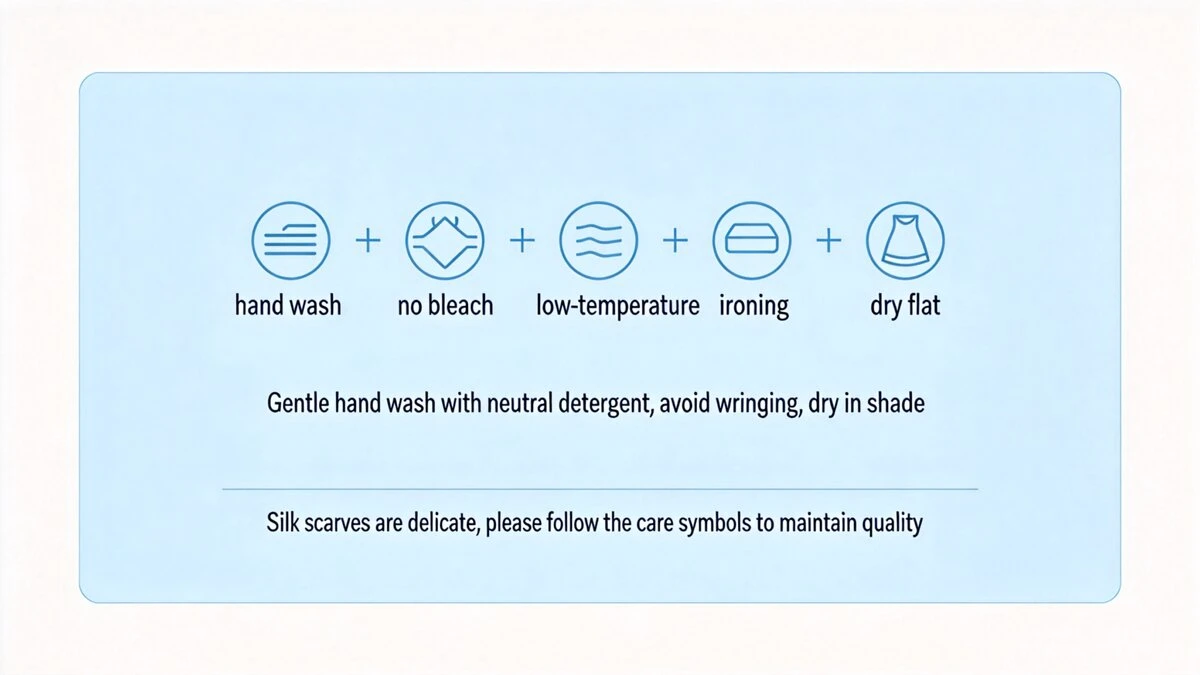
The washtub symbol represents washing instructions. Inside the symbol, temperature numbers indicate the maximum wash temperature in Celsius. A hand placed inside the washtub signifies hand wash only. When the washtub is crossed through with an X, the garment must not be washed-professional dry cleaning is required instead.
For silk scarves, the most common washing instruction is 30°C (86°F) on a gentle cycle or hand wash. Some luxury silk scarves carry a 40°C label if the fabric has been pre-washed or treated for colorfastness. Exceeding the indicated temperature can cause shrinkage, color bleeding, or fabric damage. The presence of dots inside the washtub-rather than numbers-refers to temperature ranges: one dot represents 30°C, two dots 40°C, three dots 50°C, and four dots 60°C.

Bleaching and Chlorine Instructions
The triangle symbol indicates bleaching instructions. An open triangle means any bleach may be used when needed. A triangle with two diagonal lines indicates non-chlorine bleach only-typically oxygen-based bleaches. A crossed-out triangle prohibits bleaching entirely.
For printed or dyed silk scarves, non-chlorine bleach only is the standard recommendation. Chlorine bleach can destroy natural silk fibers and cause colors to fade unevenly or disintegrate entirely. Buyers should verify that the care label accurately reflects the product's dye fixation properties, particularly for scarves marketed as "hand-painted" or featuring vibrant multi-color designs.
Ironing Instructions
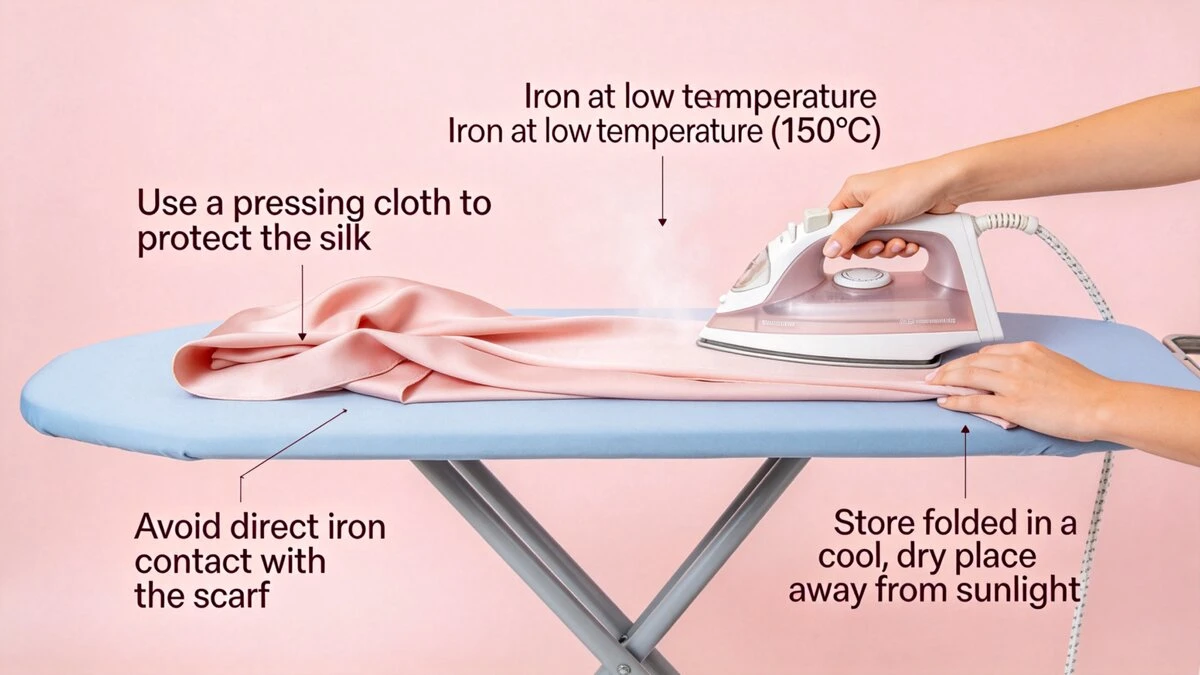
The iron symbol communicates heat settings for ironing. The number of dots inside the iron indicates temperature ranges: one dot (110°C) for synthetic fibers, two dots (150°C) for silk and wool, and three dots (200°C) for linen and cotton.
Silk scarves universally carry the two-dot ironing instruction. Excessive heat causes silk fibers to yellow and weaken. A crossed-out iron symbol means the garment should not be pressed-this applies to certain decorative silk scarves with heat-sensitive embellishments such as embroidery, sequins, or glued elements. For scarves with prints, ironing on the reverse side is typically recommended to prevent the print from cracking or sticking to the iron plate.
Drying Instructions
Drying symbols include both machine drying and natural drying instructions. A square with a circle inside indicates tumble drying, with dots representing temperature settings. A square with a horizontal line above it indicates line drying, while a square with one or two horizontal lines inside indicates drying flat.
For silk scarves, line drying in shade is the most common recommendation. Direct sunlight causes silk fibers to degrade and colors to fade, particularly for scarves in red, orange, and yellow hues. Machine drying at high heat causes shrinkage and fiber damage. Flat drying preserves the scarf's shape and dimensions, making it the preferred method for larger or heavier silk scarves such as pashmina wraps.
Professional Care: Dry Cleaning and Wet Cleaning
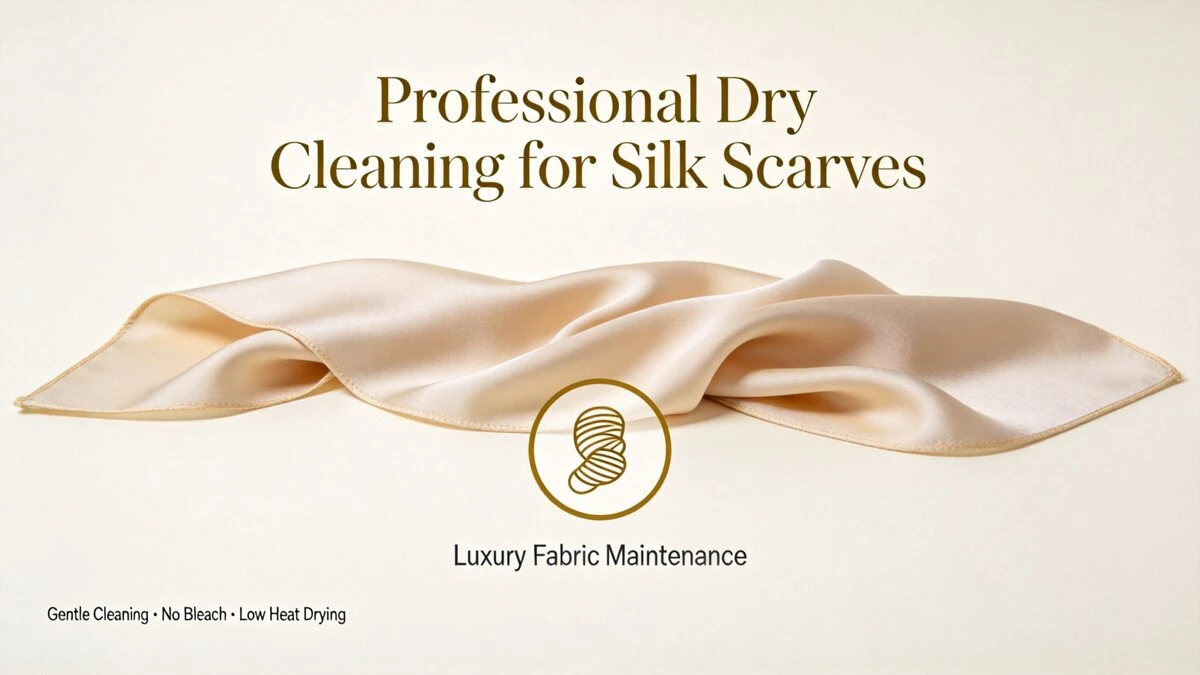
A circle represents professional textile care instructions. The letter "P" inside the circle indicates dry cleaning with petroleum-based solvents, while "F" indicates dry cleaning with fluoro-carbon solvents. A crossed-out circle prohibits professional dry cleaning.
Many luxury silk scarves are labeled for dry cleaning only, particularly those with delicate prints, beadwork, or hand-rolled edges. However, dry cleaning solvents can affect certain silk dyes and metallic thread used in decorative scarves. Buyers sourcing scarves for specific retail markets should verify that the care instruction aligns with local dry cleaning conventions.

Practical Implications for B2B Buyers
For buyers procuring silk scarves from Chinese manufacturers, care label accuracy affects product quality, market compliance, and customer satisfaction. Common issues include care labels that do not match actual product care requirements, incorrect symbol placement, and missing or illegible instructions.
When placing bulk orders, buyers should request care label samples before production runs begin. Verifying care symbols against the product's actual fiber content and dye characteristics prevents labeling errors. Care labels must comply with the destination country's regulations-the European Union requires specific symbol formats, while the United States follows ASTM D5489 guidelines.
Country-Specific Labeling Variations
Different markets have distinct care labeling requirements. The European Union follows ISO 3758 and requires five standard care symbols in a specific order: washing, bleaching, ironing, drying, and professional care. The United States uses the ASTM D5489 system with care instruction codes rather than mandatory symbols, although symbols are commonly used voluntarily. China's GB/T 8685 standard aligns closely with ISO 3758.
For exporters shipping to multiple markets, manufacturers can provide market-specific care labels or use internationally recognized symbols that satisfy most regulatory requirements. However, certain markets require explicit written instructions alongside symbols.
Conclusion
Understanding silk scarf care symbols enables B2B buyers to make informed sourcing decisions, verify manufacturer compliance, and communicate accurate product care information to end consumers. Proper care labeling protects product quality throughout the supply chain, reduces returns and complaints, and builds consumer confidence in the brand. Buyers should work closely with manufacturers to ensure care labels reflect the specific characteristics of each silk scarf product, taking into account fiber content, dye type, print method, and embellishment.
References
- ISO. (2012). ISO 3758:2012 Textiles - Care labelling code using symbols. https://www.iso.org/standard/45352.html
- American Society for Testing and Materials. (2018). ASTM D5489-18 Standard Guide for Care Symbols for Care Instructions on Textile Products. https://www.astm.org/d5489.html
- Textile Industry Association. (2024). Care Labeling Requirements for International Markets. https://www.textileworld.com/
- U.S. Federal Trade Commission. (2024). Care Labels: A Guide for Manufacturers. https://www.ftc.gov/
- European Commission. (2024). Textile Labelling and Standardization Regulations. https://ec.europa.eu/
Send Inquiry