

Understanding GSM and Thread Count: The Hidden Specs That Determine Necktie Quality
Jun 12, 2026
Leave a message
When B2B buyers evaluate necktie suppliers, they typically scrutinize price, minimum order quantities, lead times, and weave patterns. But beneath the surface aesthetics of color and design lies a pair of technical specifications that separates a premium corporate tie from a throwaway fashion accessory: GSM (Grams per Square Meter) and Thread Count. These two fabric parameters are the hidden drivers of how a necktie feels, drapes, and endures-and understanding them is a competitive advantage for any procurement professional sourcing neckwear at scale.
What Is GSM and Why Does It Matter for Neckties?

GSM stands for Grams per Square Meter-the metric system measure of fabric weight. It tells you how much a square meter of a given fabric weighs in grams. In necktie manufacturing, GSM is one of the most direct indicators of how a tie will perform across three key dimensions:
- Hand Feel - Higher GSM fabrics have a richer, more substantial tactile quality. A tie that feels flimsy or papery in your hand is almost always low-GSM.
- Drape and Knot Formation - GSM directly influences how cleanly a tie knots and how elegantly it hangs. Too light, and the tie collapses into a shapeless loop; too heavy, and it pulls at the collar throughout the day.
- Durability - Higher GSM generally correlates with denser yarn bundles and greater structural integrity, translating to longer wear life per unit.
Typical GSM Ranges for Necktie Fabrics
Necktie fabrics typically fall within a GSM range of 140 to 280, depending on the material and intended use:
- 140–180 GSM: Lightweight silk or polyester blends, ideal for summer or disposable-style corporate ties. Often used in budget promotional neckties.
- 180–220 GSM: Standard mid-weight silk or premium polyester. This is the sweet spot for most corporate uniform ties-substantial enough to knot well, light enough to be comfortable in climate-controlled offices.
- 220–280 GSM: Heavyweight silk or wool-silk blends. Preferred for luxury executive neckties, winter collections, and premium private-label programs where handcrafted quality is a selling point.
For B2B buyers specifying corporate uniforms, targeting 190–210 GSM in silk or silk-blend ties delivers the best balance of quality perception and cost efficiency. Anything below 170 GSM in silk should raise a red flag about material authenticity or fabric compromise.
Thread Count: The Density That Defines Fabric Luxury

Thread Count refers to the number of warp and weft threads per square inch (or per square centimeter in metric measurements) in a woven fabric. It is expressed as a two-number format-for example, "250 × 120 threads per inch"-where the first number represents warp threads (lengthwise) and the second represents weft threads (crosswise). Higher thread counts produce denser, smoother, more lustrous fabrics.
In necktie contexts, thread count most commonly appears in the specification of jacquard woven linings and shell fabrics. For example, a fine silk satin used in premium ties may feature a thread count of 300 × 200 threads per inch, resulting in a surface that catches light uniformly and resists pilling.
Why Thread Count Distinguishes Supplier Tiers
Not all manufacturers can produce high-thread-count fabrics consistently. Producing tight weaves requires:
- Superior yarn quality - only long-staple mulberry silk or fine synthetic filaments can be packed densely without breaking
- Precision looms - high-thread-count weaving demands modern jacquard looms with tight tension control
- Quality control discipline - inconsistencies in yarn batch or loom settings cause visible defects at high thread counts
A factory quoting you rock-bottom prices on "high thread count" silk neckties is almost certainly using one of two shortcuts: inflating the spec (misrepresenting the actual thread count) or using lower-grade yarn that breaks under tight weaving, resulting in thin, weak fabric despite a respectable-looking number.
How to Use GSM and Thread Count in Supplier Evaluation

For procurement professionals, GSM and thread count are not just quality indicators-they are supplier differentiation tools. Here is how to incorporate them into your sourcing workflow:
1. Request Fabric Specification Sheets (Lab Reports)
Any reputable necktie manufacturer should be able to provide a fabric specification sheet that includes GSM, fiber composition, and thread count. Red flags include:
- Supplier refuses to provide lab-tested fabric specs
- Specs list only "fabric weight" without specifying the unit (GSM vs. oz/yd²)
- Thread count data is missing from jacquard fabric descriptions
2. Cross-Reference GSM with Price
If a supplier offers 210 GSM mulberry silk neckties at a per-unit price that seems too low to be credible, request a fabric swatch and have it independently tested. A reputable Shanghai or Shenzhen textile testing lab (such as SGS or Bureau Veritas) can verify GSM in 48 hours for approximately $30–$50 per sample.
3. Match Specs to End-Use Requirements
Not every program needs the highest GSM. Calibrate your specifications to the use case:
- High-frequency corporate wear (5+ wears per week): Target 200–230 GSM silk with ≥200 thread count per inch in the shell fabric.
- Executive gift or luxury retail: Target 220–260 GSM, high-thread-count satin or jacquard, hand-sewn construction.
- Promotional or event giveaways: 160–190 GSM polyester blends can serve adequately, provided you do not represent them as silk.
The YILI Advantage: Precision Fabric Parameter Control

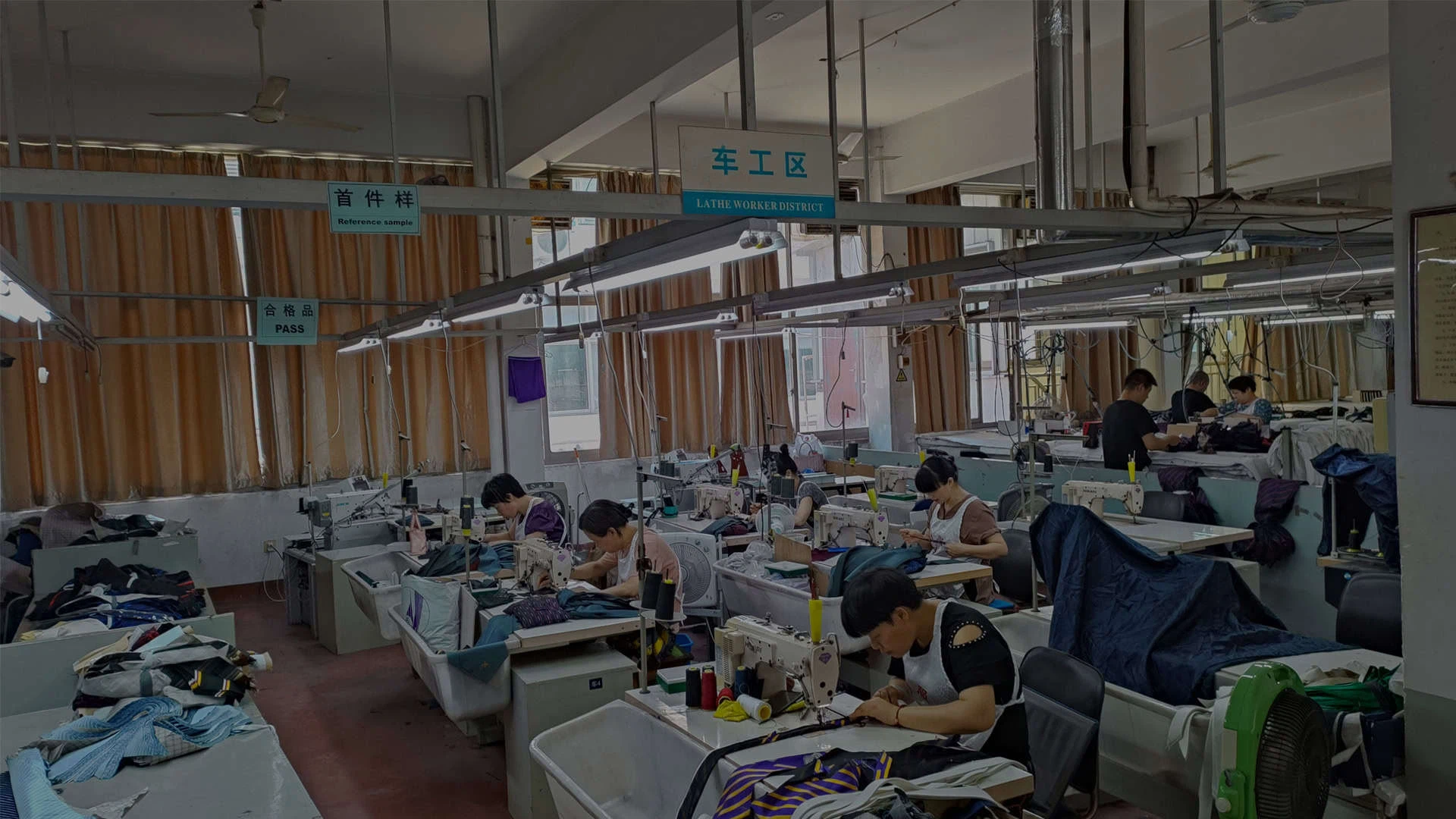
Shengzhou YILI Necktie & Garment Co., Ltd. operates an integrated manufacturing facility that controls fabric production from yarn to finished tie. This vertical integration is the structural foundation for the precision parameter control that B2B buyers demand:
- In-house jacquard weaving: YILI's modern looms produce jacquard shell fabrics with thread counts from 180 × 120 to 300 × 200 threads per inch, enabling precise matching of fabric spec to buyer requirements.
- GSM verification at production: Fabric rolls are weighed and recorded before cutting, with GSM tolerances held within ±5% of buyer specifications. This is verified through YILI's own quality management system aligned with ISO9001 standards.
- Full material traceability: All silk (mulberry silk, grade A), polyester, cotton, and wool inputs are traceable to source, eliminating the mystery-fiber problem common among trading-company suppliers.
- Swatch-to-order consistency: Because YILI controls the full production chain from weaving to finishing, bulk orders consistently match the approved swatch-critical for reorder programs where color shading and weight uniformity across 2,000+ units are non-negotiable.
For buyers who have been burned by trading-company suppliers where "silk" ties from different batches arrive with wildly inconsistent hand feel and weight, YILI's in-house weaving and testing protocol represents a measurable risk reduction.
Quick Reference: GSM and Thread Count at a Glance
The table below summarizes typical GSM and thread count values for common necktie fabric categories:

| Fabric Type | Typical GSM | Thread Count Range (per inch) | Best For |
|---|---|---|---|
| Standard Polyester | 150–180 | 120 × 80 | Promotional ties, budget corporate programs |
| Polyester-Silk Blend | 170–200 | 160 × 100 | Mid-tier corporate uniforms |
| Standard Mulberry Silk | 190–220 | 200 × 120 | Corporate uniform ties, logo ties |
| Premium Silk Satin | 210–240 | 250 × 160 | Executive gifts, retail neckwear |
| Luxury Silk Jacquard | 230–270 | 280 × 180 | High-end retail, luxury private label |
| Wool-Silk Blend | 220–260 | 200 × 140 | Autumn/winter collections, formal occasions |

Conclusion: Specsmanship as a Procurement Strategy
GSM and thread count are not textile curiosities-they are actionable procurement specifications that any professional buyer can request, verify, and enforce. By making these parameters part of your standard RFQ (Request for Quotation) documentation, you immediately filter out suppliers who cannot deliver consistent fabric quality, and you establish the foundation for long-term private-label programs where repeatability matters more than first-order price.
YILI's integrated weaving and testing capability means that GSM and thread count specifications agreed upon at the sampling stage carry through to bulk production with minimal deviation. For buyers building a multi-year corporate neckwear program, that consistency is not a luxury-it is the baseline requirement.
To discuss fabric specifications for your next neckwear order, contact YILI at Yili05@chinayilitie.com or call +8613567590288.
References
- Textile Terms and Definitions Committee. "Standard Terminology Relating to Fabric Weight." ASTM D3136. ASTM International.
- Fairchild Books. "The Textile Institute's Textile Terms and Definitions." The Textile Institute.
- U.S. Customs and Border Protection. "Guidelines for Textile and Apparel Importers." https://www.cbp.gov/trade/quota.
- ISO. "ISO 9001:2015 Quality Management Systems." https://www.iso.org/standard/62085.html.
- Shanghai Fiber Testing Center. "Fabric Weight and Thread Count Testing Procedures." SGS Group Testing Services.
Send Inquiry