

Why Shengzhou is the Necktie Capital of the World: A Look at China's Premier Necktie Manufacturing Cluster
Jun 24, 2026
Leave a message
When you pick up a premium silk necktie from a luxury department store in Milan, Tokyo, or New York, there's a roughly one-in-three chance it was born in a modest factory in Shengzhou, Zhejiang Province-a county-level city of just 730,000 people that produces more neckties than any other place on Earth.
Shengzhou's dominance in neckwear manufacturing isn't an accident of geography or a flash-in-the-pan success story. It's the result of three decades of accumulated expertise, vertically integrated supply chains, and a manufacturing culture that treats necktie-making as a high art. Here's why this unassuming Chinese city has earned its title as the world's necktie capital.

A Historical Foundation Built on Silk Heritage
Shengzhou's relationship with silk weaving stretches back over 2,500 years. The region sits within the historic Silk Road corridor, where sericulture-silkworm farming and silk production-became a way of life generations before industrialization arrived.
By the 1980s, as China's economic reforms opened doors to global trade, Shengzhou's established silk industry found an opportunity: the global neckwear market was dominated by Italian and French manufacturers, but their production costs were unsustainable in an era of increasing price competition. Chinese factories could produce quality neckties at competitive prices, and Shengzhou had both the raw material expertise and the workforce to do it.
The first wave of international orders came from European brands seeking cost-effective manufacturing partners. Shengzhou's factories didn't just assemble neckties-they invested in learning the nuances of Western fashion: color matching, pattern design, drape and weight requirements, and the precise stitching that separates a premium tie from a commodity one.

The Numbers That Define Dominance
Shengzhou's manufacturing capacity is staggering by any measure. The city produces approximately 600 million neckties annually-equivalent to roughly one tie for every twelve people on Earth. To put this in perspective:
- 60% of global necktie production: Shengzhou accounts for the majority of the world's neckties, regardless of where they're ultimately sold
- 300+ necktie factories: The city has evolved into a specialized industrial cluster with hundreds of interconnected manufacturing operations
- 40+ years of continuous production: Unlike boom-and-bust industries, Shengzhou's neckwear sector has sustained growth through multiple economic cycles
- Complete supply chain integration: From silk reeling and yarn dyeing to final packaging, nearly every step happens within the Shengzhou ecosystem
This concentration creates what economists call "agglomeration effects"-where proximity between suppliers, manufacturers, and skilled workers generates efficiencies that isolated factories simply cannot replicate.

The Vertical Integration Advantage
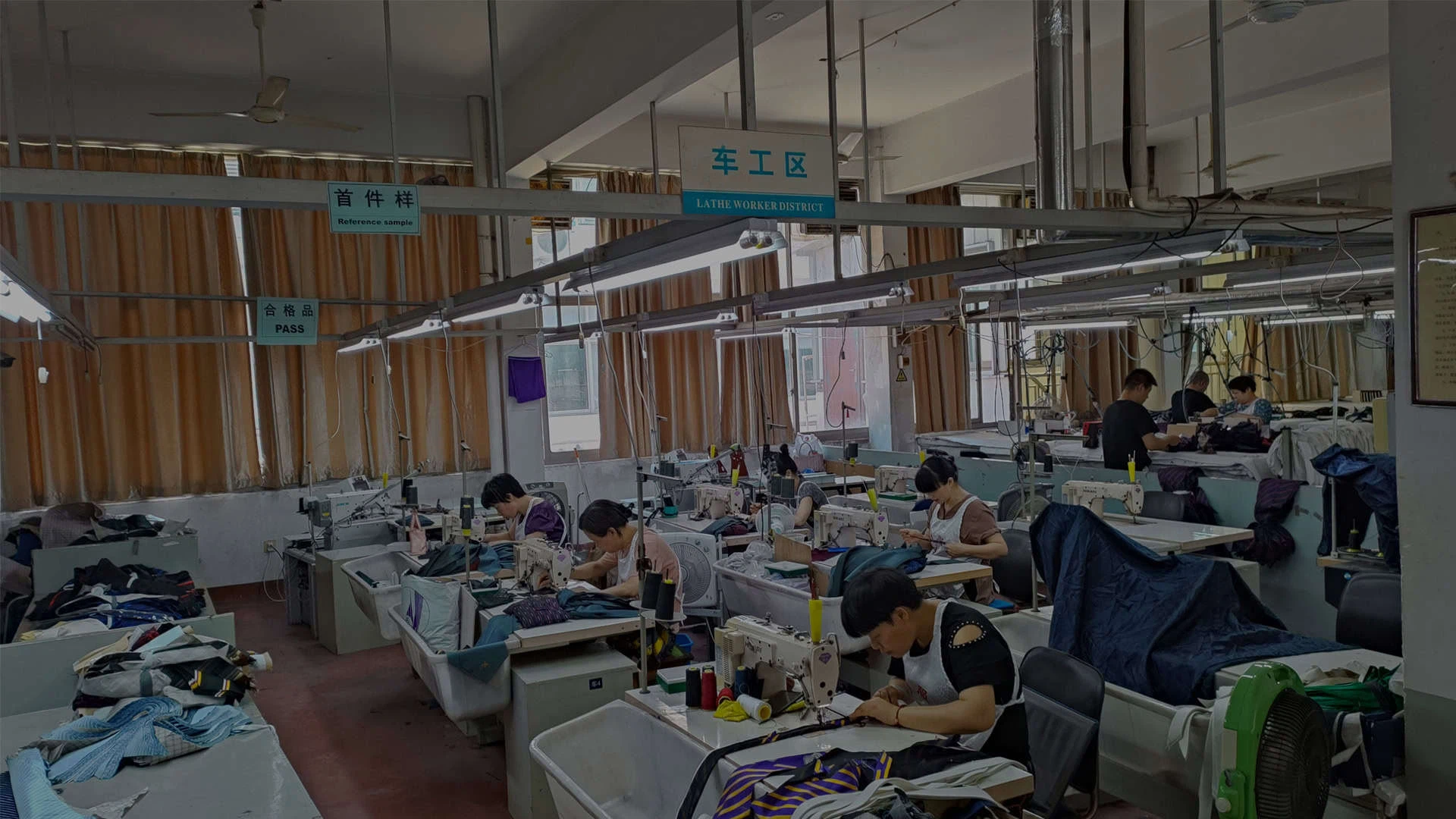
What truly sets Shengzhou apart is its vertically integrated supply chain. In many competing manufacturing regions, a necktie factory might purchase fabric from a separate mill, order interlining from another supplier, and outsource finishing to a third party. In Shengzhou, the typical factory does all of this under one roof.
Consider what goes into a premium silk necktie: the mulberry silk must be reeling to precise specifications, the fabric needs to be woven with consistent thread tension, the interlining must be cut and treated to hold the knot properly after repeated wearing, the blade and tail must be stitched with precision, and the entire piece must be hand-folded and pressed before packaging. Each step requires specialized equipment, trained technicians, and quality control checkpoints.
Shengzhou's factories have invested in all of these capabilities. A single large operation might house silk reeling machines, jacquard looms, cutting and sewing stations, and a finishing department with hand-pressing equipment. This vertical integration reduces lead times dramatically-what might take six weeks at a分散 supplier network can often be completed in two weeks in Shengzhou.
Quality Evolution: From "Made in China" to Premium Positioning
The persistent stereotype of Chinese manufacturing as synonymous with low quality couldn't be further from the reality in Shengzhou's neckwear industry. The city's factories have spent decades climbing the value chain, and today they produce neckwear for some of the world's most prestigious brands.
Silk Selection: Shengzhou factories source premium Grade 6A mulberry silk, the highest commercial grade available, with long, uniform fibers that produce smooth, lustrous fabric with excellent draping properties.
Weaving Precision: Modern jacquard looms operated by experienced technicians can produce intricate patterns with thread counts exceeding 400 per inch-sufficient resolution for photorealistic designs that rival Italian silk printing.
Construction Standards: Many Shengzhou factories have achieved ISO 9001 certification and comply with BSCI (Business Social Compliance Initiative) standards, meeting the social compliance requirements of European and American retailers.
Hand-Finishing: Despite automation in cutting and pressing, the critical final fold and hand-stitching of the keeper loop remain manual operations-skills developed over generations of silk workers.

The Working Culture: Generations of Expertise
Perhaps the most irreplaceable asset Shengzhou possesses is its human capital. A city that has produced neckties for 40+ years has developed generational expertise-skills that cannot be easily transferred or replicated elsewhere.
A master silk weaver might have spent 30 years perfecting thread tension adjustments. A quality control inspector can identify subtle shade variations invisible to untrained eyes. A cutter can lay patterns on silk with minimal waste, extracting 15-20% more ties from the same fabric width than an inexperienced operator.
This expertise accumulates through apprentice relationships and hands-on experience. Young workers learn from veterans, absorbing tacit knowledge about fabric behavior, machine settings, and quality standards that no manual or training video can fully capture.
Strategic Location and Infrastructure
Shengzhou's logistics infrastructure supports its manufacturing excellence. Located within the Yangtze River Delta-one of China's most economically developed regions-the city has access to:
- Ningbo-Zhoushan Port: One of the world's busiest container ports, approximately 150 kilometers away, providing direct shipping lanes to major global markets
- Hangzhou Xiaoshan International Airport: Connecting the region to international destinations for air freight needs
- Highway network: Expressway connections to Shanghai, Hangzhou, and other major cities enabling just-in-time component deliveries
- Specialized logistics providers: Freight forwarders experienced in neckwear shipping, familiar with packaging requirements for delicate silk products

The Future of Shengzhou's Necktie Industry
Shengzhou's neckwear manufacturers aren't standing still. Facing rising labor costs and increasing competition from lower-cost regions, the city's factories are investing in automation, design capabilities, and brand development.
Design Autonomy: Many factories have established in-house design studios, creating proprietary patterns and colorways that they pitch directly to international buyers-shifting from pure contract manufacturing to design partnership.
Sustainable Production: Responding to global ESG requirements, Shengzhou factories are adopting OEKO-TEX certified dyes, implementing water recycling systems, and obtaining environmental certifications required by European retailers.
Direct-to-Buyer Relationships: Bypassing traditional trading company intermediaries, Shengzhou exporters are building direct relationships with international brands and retailers, offering better pricing transparency and communication efficiency.

Sourcing from Shengzhou: What Buyers Need to Know
For international buyers considering Shengzhou as a neckwear sourcing destination, several factors determine successful partnerships:
Factory Selection: The gap between Shengzhou's best and average factories is significant. Top-tier operations serving luxury brands invest heavily in quality control; mid-tier factories may produce acceptable but inconsistent results. Factory audits and sample evaluation are essential due diligence steps.
Communication Barriers: While English is increasingly common in Shengzhou's export-oriented factories, technical discussions about specifications, quality standards, and production schedules often benefit from bilingual supervision or professional translation.
Sample Development Timeline: Plan for 2-3 weeks to develop and approve initial samples; bulk production typically requires 4-6 weeks from order confirmation, depending on complexity and current order backlog.
MOQ Realities: Most Shengzhou factories prefer orders of 300-500 pieces per colorway for custom products, though established relationships can enable smaller runs at premium pricing.

Conclusion
Shengzhou's title as the necktie capital of the world rests on foundations that are genuinely difficult to replicate: centuries of silk heritage, four decades of continuous manufacturing experience, vertically integrated supply chains, and a deep reservoir of skilled workers. While cost advantages have compressed over time, the city's combination of expertise, infrastructure, and ecosystem depth ensures it will remain central to global neckwear production for decades to come.
For brands and retailers seeking quality neckwear at competitive prices, Shengzhou isn't just a sourcing option-it's often the starting point of any serious supply chain evaluation.
References:
- China Silk Association. "Zhejiang Shengzhou: The World's Largest Necktie Production Base." https://www.chinasilk.org.cn/
- China Daily. "Shengzhou Neckties: From OEM to Brand Building." https://www.chinadaily.com.cn/
- Textile World Asia. "The Evolution of China's Textile Manufacturing Clusters." https://www.textileworld.com/asia
Send Inquiry