

5 Steps - Helps You Identify A Quality Tie in 60 Seconds
Aug 07, 2023
Leave a message
Why Finding the Right Tie Matters
Choosing the right tie for an occasion or meeting can be challenging. It's not only about color or pattern, there's more to it.
A quality tie is vital for your outfit due to the following reasons:
First impressions: Ties are often the first thing noticed, setting the tone for the occasion.
Reflects your style and personality: A quality tie mirrors your character and attention to detail.
Boosts confidence: Dressing well, including a good tie, enhances your confidence and success.
Your tie is not just an accessory, but a statement, so make it count!
How do you identify a quality tie? Follow our 5 easy steps to become a tie expert in just 60 seconds!
1. The Look and Feel: Follow your feeling
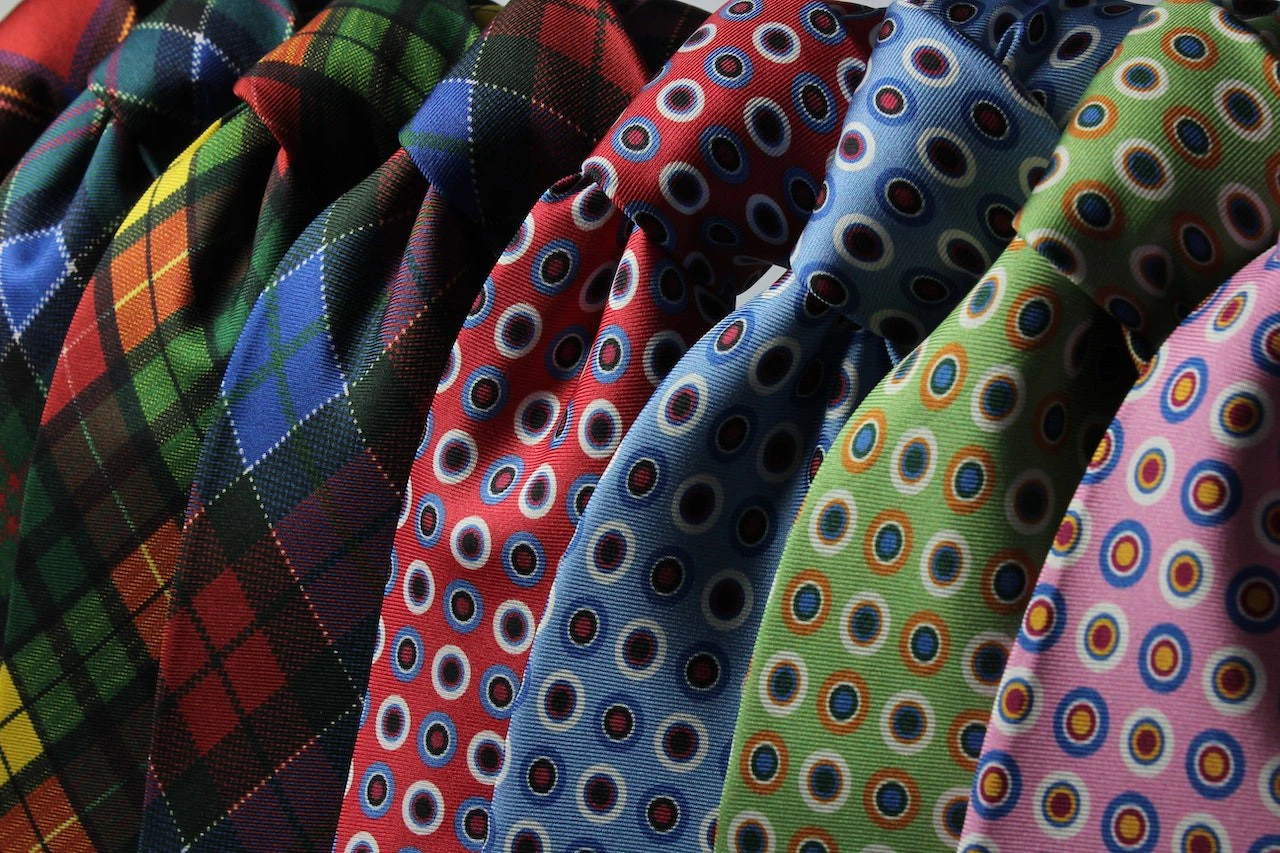
You're in search of the perfect tie and are overwhelmed by the array of options. Here's how to pick a quality tie quickly and simply.
Firstly, consider the pattern and color. A tie should enhance your outfit, not dominate it. Trust your instincts when making your selection.
If you're unsure, here's a guide:
Plain ties: Suitable for any occasion and easy to match with patterned shirts. Ideal for beginners.
Striped ties: A bold choice that can vary greatly depending on the width and direction of the stripes.
Polka dot ties: A playful option that adds a touch of fun to an outfit without being too excessive.
Patterned ties: An adventurous choice with many designs available. These can be harder to pair with shirts, so choose carefully.
As for color, again, trust your instincts. Keep in mind, your tie color should match your shirt and suit. A good rule is to choose a tie color darker than your shirt.
A tie reflects your personality. Wear it confidently and let it speak for itself.
That's the first step. Now, onto the next.
2. The Touch Test: Understanding Fabric Quality
Ever wondered how to judge the quality of a tie with just a touch and a squeeze? Well, you're in luck. It's not as complicated as you might think and it does not require any special skills. You just need to know what to look for.
Step 1: Start by picking up the tie. It should feel soft and smooth, not stiff or scratchy. This is an indication that the tie is made from high-quality material, like silk or wool.
Silk ties: They should have a soft, smooth, and luxurious feel. They're often considered the gold standard in ties.
Wool ties: They have a slightly rougher texture but should still feel soft. These are great for colder months as they give off a warm and cozy vibe.
Step 2: Give the tie a gentle squeeze. A quality tie will have a bit of weight and resilience to it. It should spring back to its original shape quickly after being squeezed, indicating that it's well-constructed.
A high-quality tie will feel substantial, not flimsy or light. It's the little details that make a big difference.
Step 3: Finally, run your fingers along the length of the tie. A quality tie should be smooth and consistent, with no bumps or loose threads. A poorly made tie, on the other hand, may have uneven stitching or loose threads, which are a definite no-no.
Remember, a good touch test can give you a lot of information about the quality of a tie. So, the next time you're out shopping for a tie, don't forget to give it a squeeze!
3. The Devil is in the Details: Checking for Quality Construction
Choosing a high-quality tie involves more than just its appearance. Let's take a closer look.
Sometimes, issues with a tie aren't immediately apparent. It's important to examine them closely.
Inspect the Seams
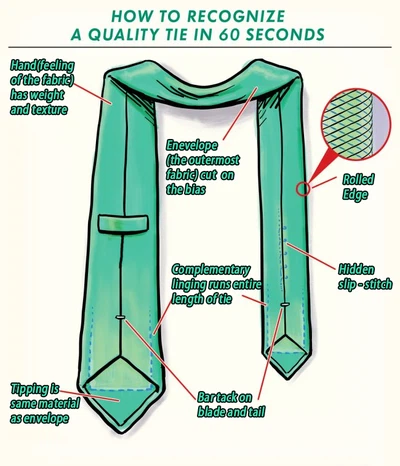
The seams of a good tie should be almost invisible, both on the back and on the shorter, narrower end.
Well-made ties have nearly undetectable seams.
Fabric Cut at 45 Degrees

The first step in examining a tie is to see if the fabric has been cut at a 45-degree angle, or 'on the bias'. This ensures the tie drapes well and returns to its original shape after knotting.
"A tie cut 'on the bias' will drape beautifully and return to its original shape after being knotted."
To determine if a tie has been cut on the bias, follow this checklist:
Stretch the Tie: Stretch the tie lengthwise and at a 45-degree angle. If it gives in the lengthwise direction but not at an angle, it's cut on the bias.
Check the Drape: Drape the tie over your hand. If it doesn't twist, it's cut on the bias.
Examine the Stitching
The quality of stitching is a key indicator of a good tie. Look for neat, straight lines that run the length of the tie on the back.
Note: The back of the tie reveals much about its quality.
Look for a 'slip stitch', which allows the tie flexibility when knotted.
Ensure the stitches are tight and secure.
Two Bar Tacks
Bar tacks are small horizontal lines on the back of the tie that hold its layers together. Look for two bar tacks - one near the label and the other at the end.
"Bar tacks help your tie maintain its shape and last longer."
This is the first step to becoming a tie expert. Stay tuned for more on tie materials.
4. Tie a knot of your liking and have the right length
Partner, you've journeyed far! You've mastered the intricacies of tie shopping, but the next challenge looms: tying the impeccable knot. Fear not, for we stand by your side.
First and foremost, clarity is key: your tie's length carries weight. It's not just aesthetics; comfort and style play in too. So, how lengthy should it be? I'm glad you raised the question.
When you secure a quality tie, it should delicately graze your trouser's waistband or your belt buckle's upper edge. Stray too far, and you risk a fashion misstep.
Remember, partner, your knot isn't merely fabric entwined; it's a reflection of you. So proceed boldly, tying a knot that harmonizes with the occasion, your style, and most importantly, you.
Now, let's dive into knotting. Experiment with a few of your favorite knots using this tie, ensuring they land at the perfect length. The world of tie knots is vast – from the classic Four-In-Hand to the intricate Eldredge. Your knot choice should hinge on the occasion, your collar style, and of course, your personal flair. Here's a handy cheat sheet for you:
| Knot | Occasion | Collar Type |
|---|---|---|
| Four-In-Hand | Casual | Button-Down |
| Half-Windsor | Business Casual | Spread |
| Full Windsor | Formal | Wide Spread |
Now, armed with this knowledge, you can confidently navigate the world of ties. Remember - it's not just about what looks good, but also about what feels good. So, go out there, find a tie that speaks to you, and tie the knot (pun absolutely intended).
5. Ask about the price - if it's within your budget, buy it
So you've made it this far. You've found a tie that looks fantastic, feels divine, and is crafted with class. But, my friend, you're not done yet. The last hurdle to jump? The price tag. It's the all-important question: Can you afford it? Let's dive in.
Step 1: Look at the price. It's as simple as that. A quality tie will usually have a hefty price. Remember, you're not just paying for a piece of fabric, but for the craftsmanship and quality that goes into making it. But don't let a high price intimidate you straight away. Let's move on to step 2.
Step 2: Ask yourself, "Is this tie within my budget?" You know your limits, so be honest with yourself. There's no point in buying a tie that'll put you in debt. There's nothing stylish about bankruptcy, now is there?
'Buy the best quality you can afford.' - Wise People
Step 3: Consider how often you'll use the tie. Is it for special occasions or daily wear? The more you plan to wear it, the more it may be worth investing a little extra.
Reference article
Brett and Kate McKay • How to Recognize a Quality Tie in 60 Seconds
FIND A LOCATION • How to Judge A Tie's Quality
SVEN RAPHAEL SCHNEIDER • 7 Quality Hallmarks of A Tie
Send Inquiry