

Exploring The Diversity Of Muslim Headscarf Styles
Mar 15, 2025
Leave a message
1. Introduction
In a world where cultural symbols often transcend borders, the Muslim headscarf emerges not merely as fabric but as a living tapestry of faith, identity, and artistry. Rooted in the Quranic principle of haya (modesty), these veils embody a paradox: they are both shields of privacy and canvases of self-expression. Yet, to reduce them to uniformity would be to overlook the kaleidoscope of styles shaped by geography, tradition, and personal conviction. From the sun-baked streets of Jakarta to the haute couture runways of Paris, the Muslim headscarf defies monolithic categorization, weaving threads of devotion and creativity into a global narrative .
2. Common Styles of Muslim Headscarves
 A. Everyday Elegance: Versatile Expressions
Hijab
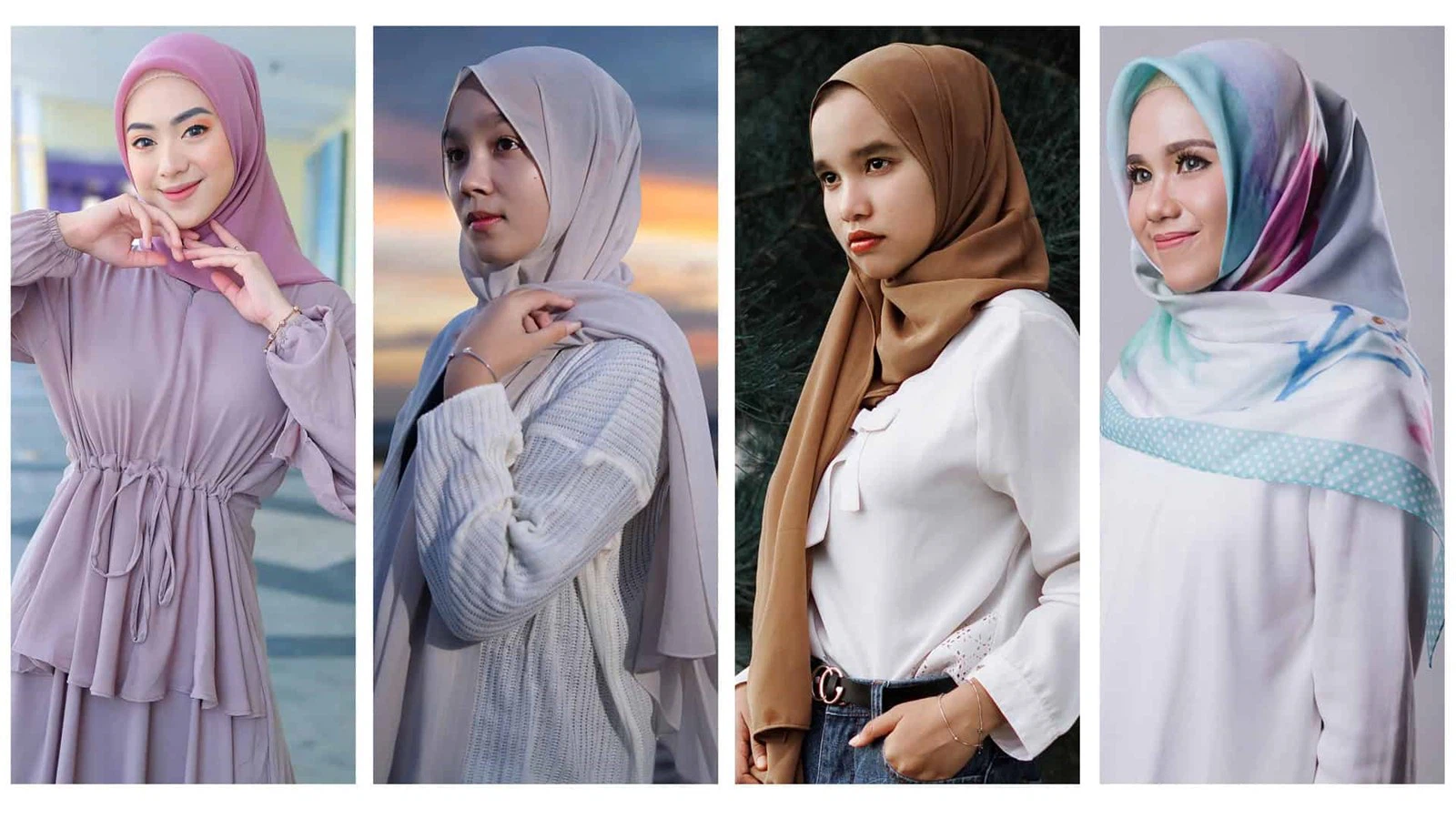
Originating from the Arabic term for "veil," the hijab transcends its linguistic roots to become a global emblem of modesty, its square or rectangular form draped with artistic precision across countless cultures. In Western societies, it morphs into a chromatic spectacle-vibrant silks juxtaposed against urban landscapes-while in Middle Eastern markets, earthy tones whisper tradition. Its genius lies in adaptability: a single fold can signal reverence in a mosque or rebellion on a feminist panel.
Tudong
Southeast Asia's answer to pragmatic piety, the tudong unfolds as a sartorial symphony. Unlike its counterparts, this one-piece marvel marries function and flair: a front panel embroidered with floral motifs dances atop layered under-panels in clashing hues. Worn by Indonesian and Malaysian women, it harmonizes with the baju kurung-a flowing tunic-to create an ensemble where faith and folklore coalesce.
Dupatta
In the monsoon-swept plains of South Asia, the dupatta floats like a diaphanous cloud-sometimes sheer enough to glimpse the sky, other times weighted with gold-threaded grandeur. More than a headscarf, it is a cultural chameleon: draped over the head during prayers, slung across shoulders at weddings, or clutched as a shield against prying eyes in crowded bazaars.
B. The Enigma of Concealment: Veils Beyond the Face
Niqab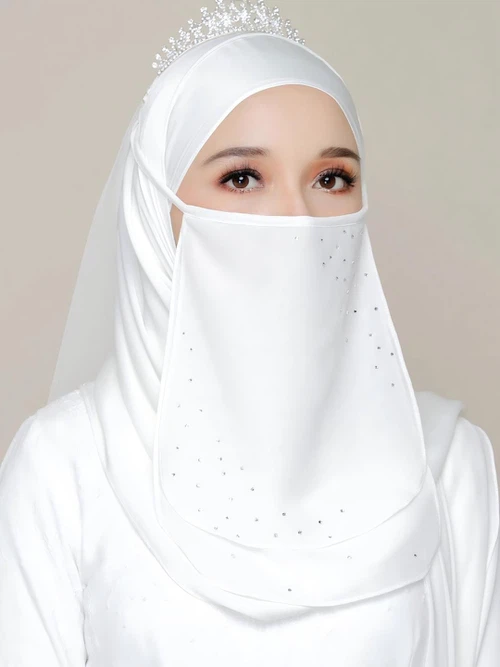
A study in paradox, the niqab conceals yet reveals. Its black fabric swallows the face whole, leaving only the eyes-windows to the soul-exposed. Predominant in Gulf nations, it sparks global debates: is it oppression or empowerment? In France, where it is banned alongside the burqa, it becomes a political battleground; in Riyadh, a marker of cultural fidelity.
Burqa
The burqa's mesh screen transforms the wearer into a walking enigma, her vision unimpeded while her identity dissolves into blue polyester. Once synonymous with Afghanistan's Taliban regime, it now symbolizes the clash between religious autonomy and secular governance, its prohibition in European public spaces igniting fires of dissent.
C. Regional Masterpieces: Threads of Identity
Shayla
Sleek as midnight, the shayla wraps Persian Gulf women in liquid darkness. This elongated rectangle, pinned with military precision at the shoulders, eschews ornamentation-its power lies in simplicity. A uniform of sorts, it unites Bedouin heritage with modern minimalism, proving that austerity can be arresting.
Chador
Iran's chador flows like a black waterfall, engulfing the body in a single sweep. Worn over a smaller headscarf, it is both armor and art: a protest against Westernization under the Shah, a badge of resistance, and now, for some, a nostalgic nod to pre-revolutionary elegance.
Doa Gaun
Southeast Asia's doa gaun-"prayer's garment"-is practicality incarnate. Slip it over daily attire, tie the strings, and intricate embroidery frames the wearer in devotion. Designed for swift transitions between market stalls and mosque prayers, it embodies Islam's seamless integration into tropical life.
3. Cultural and Social Dimensions
 The Muslim headscarf is a battleground of meanings, where threads intersect with politics, art, and identity. In fashion capitals like Istanbul and London, designers like Dian Pelangi reimagine the hijab as a haute couture centerpiece, swathing models in metallic brocades and lace-a defiant rebuke to those who equate modesty with mundanity. Yet, this sartorial renaissance clashes with legislative shackles: France's 2010 ban on face-covering veils, rooted in secular dogma, reduces complex cultural garments to security threats. Meanwhile, in Tehran's bustling metros, young women pair their chadors with skinny jeans, threading rebellion into tradition.
At its core, the headscarf debate crystallizes a universal struggle: who controls a woman's narrative? For some, it is divine decree; for others, a patriarchal heirloom. Yet, between these poles lies a spectrum of agency-a Malaysian student choosing a pastel tudong to complement her Instagram feed, or an Emirati CEO wielding her shayla as a symbol of boardroom authority. To dismiss these nuances is to unravel the very fabric of cultural dialogue.
4. How to Respectfully Discuss Headscarves: Navigating a Cultural Labyrinth
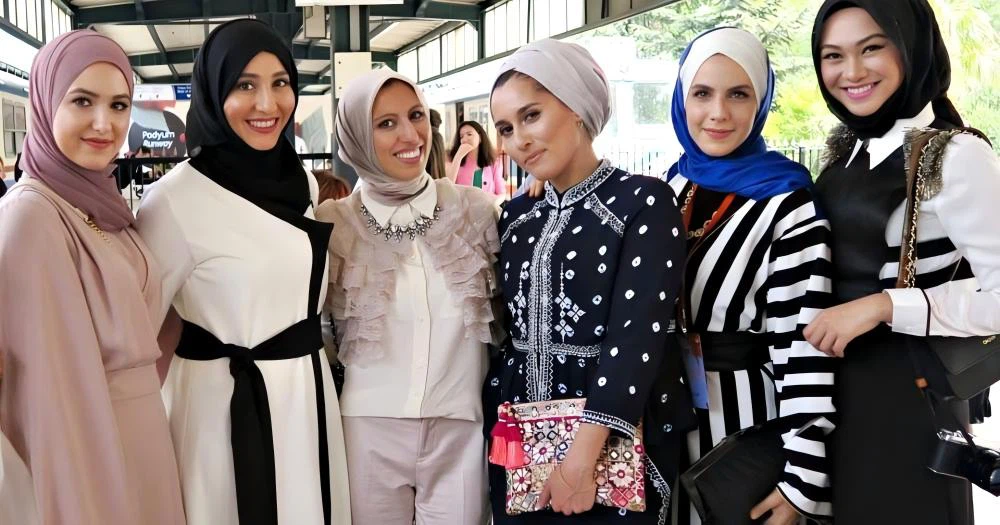
To engage with the headscarf is to step into a minefield of misinterpretations, where assumptions often drown out nuance. The first rule? Abandon the monolithic lens. Not every Muslim woman dons a veil, and those who do navigate a spectrum of motivations-devotion, cultural pride, or even silent dissent. In Iran, where state-mandated hijab laws reign, women wield sartorial subversion: a loosely draped scarf slipping to reveal strands of hair becomes a whisper of resistance. Meanwhile, in Jakarta's bustling markets, a tudong-clad teenager might pair her headscarf with ripped jeans, merging piety with punk rebellion.
Language, too, is a battleground. The term hijab-often misused as a catch-all-actually refers broadly to modesty, not just the physical veil. Precision matters: conflating the niqab (face veil) with the burqa (full-body covering) erases regional identities and reduces complex traditions to caricatures. When France banned face coverings in 2010, it framed the niqab as a threat to secularism-yet for many wearers, it is a shield of spiritual intimacy, not a political manifesto.
To dialogue respectfully is to listen beyond the fabric. Ask not why a woman veils, but how she inhabits her choice. Does her chador in Tehran signal compliance, or is its artful drape a coded critique of authoritarianism? When Indonesian designers reimagine the doa gaun with batik motifs, are they crafting mere clothing-or rewriting national identity? The answers lie not in binaries but in the liminal spaces where faith and agency collide.
5. Conclusion: Threads of a Global Tapestry
The Muslim headscarf, in all its permutations, defies reduction. It is a mirror reflecting paradoxes: tradition and innovation, obedience and rebellion, silence and roar. From the White Wednesday protests in Tehran-where women waved white scarves like flags of defiance-to Istanbul's runways where hijabs shimmer with Swarovski crystals, the veil emerges as a medium for political theater and personal poetry.
Yet its story remains unfinished. As globalization tightens its grip, the headscarf evolves: a Malaysian influencer's pastel hijab trends on TikTok, while an Afghan refugee stitches her burqa with hidden pockets for survival. Each stitch, each fold, carries the weight of history and the spark of reinvention. To dismiss these narratives as mere "modesty" is to overlook their power as weapons of visibility in an era of erasure.
Let this be an invitation: peer beyond the veil's surface. See not constraint, but creativity; not dogma, but dialogue. For in its folds lies a lesson-that identity, like fabric, is woven from countless threads, each trembling with the possibility of reinvention.
FAQ & Further Explorations
Q: Is the hijab compulsory in Islam?
A: Interpretations vary. While some communities emphasize Quranic modesty mandates, others view it as a personal choice. In Iran, legal enforcement clashes with individual reinterpretations, as seen in protests where women reclaim agency through stylistic dissent.
Q: How does fashion intersect with political activism?
A: Designers in Turkey and Indonesia transform headscarves into canvas statements, embedding traditional motifs with feminist slogans or environmental messages. These garments become wearable manifestos, challenging stereotypes while honoring heritage.
Further Reading:
Explore cross-cultural studies on Muslim women's fashion in Iran, Turkey, and Indonesia.
Investigate the role of social media in reshaping modesty aesthetics globally.
Send Inquiry