

Introduction
The necktie is more than just an accessory; it is a symbol of style, professionalism, and historical significance. Modern society often sees the necktie as a hallmark of business attire and formal wear, but its roots delve deeply into centuries of history. While it is commonly thought that the necktie originated in the early days of the Thirty Years War, archaeological discoveries suggest its existence dating back even further, to ancient China and Rome. This narrative journey through time explores the evolution of the necktie from its humble beginnings to its revered status today.
The Early Origins in China and Rome
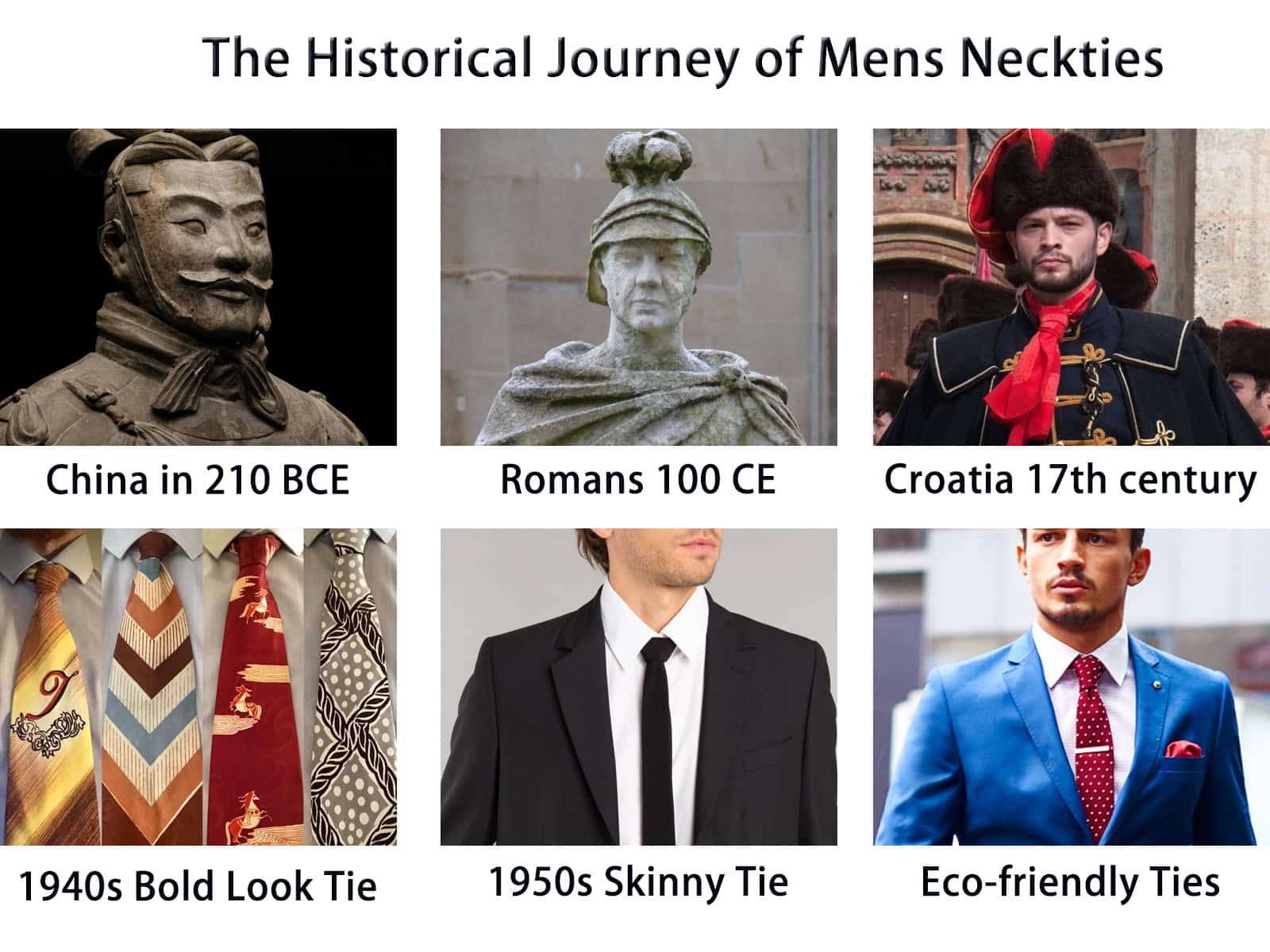
 Our historical journey first takes us to China in 210 BCE. Archaeological excavations have unveiled that the Terracotta Army, created to guard the tomb of China's first emperor, Qin Shi Huang, featured warriors adorned with wide neck scarves. These early forms of neckwear are believed to serve both functional and decorative purposes, challenging the prevailing notion that neckties originated solely in Europe. This fascinating discovery highlights the Qin dynasty's sophisticated sartorial culture and suggests that the concept of neckwear as a symbol of status and function was present in ancient China.
Moving forward to around 100 CE, we find the Romans also contributing to the history of neckwear. Roman generals and senators wore neck scarves known as 'Fascalia'. Unlike the purely functional uses noted in ancient China, the Roman 'Fascalia' were part of military attire and additionally signified power and authority. The Roman tradition of neck scarves as a symbol of rank foreshadowed the necktie's future association with social status and professionalism. These early Roman neckpieces were a precursor to the decorative and functional accessories that would flourish in Europe centuries later.
With these ancient roots firmly established, the evolution of the necktie transitions into its more recognized form during the 17th century with the introduction of the cravat in France. This early history, stretching across continents and millennia, sets the stage for the necktie's journey through European fashion and its eventual transformation into the modern tie we know today.
The Birth of the Cravat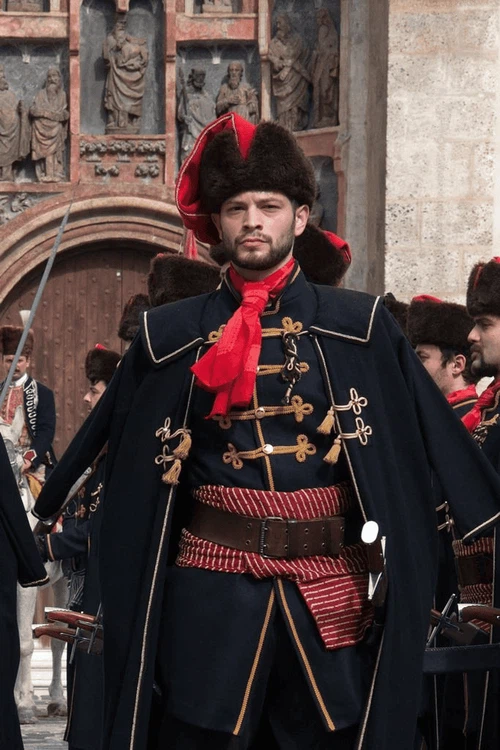
The modern concept of the tie can be traced back to the 17th century, more precisely during the tumultuous Thirty Years War (1618-1648). Croatian mercenaries, who fought alongside French forces, wore distinctive, colorful cloth pieces around their necks to fasten their jackets. These functional and yet striking pieces of neckwear were initially a practical solution to keep their clothing secure during battles. However, they also had an unintended consequence-they caught the eye of the French.
King Louis XIII noticed these intriguing neckpieces and took a particular interest in them. He admired the way these Croatian soldiers presented themselves, despite the adversities of war. The king adopted this style and introduced it to the French court, naming it the "cravat," derived from "Hrvat," the Croatian word for Croat. This adoption marked the start of the cravat's integration into European fashion, transforming from military practicality to a high-fashion statement.
From the battlefields of Europe to the luxurious halls of French aristocracy, the cravat rapidly rose in popularity. It was no longer just a piece of cloth; it became a symbol of elegance and sophistication, setting the foundational blueprint for the modern necktie.
Adoption by French Aristocracy
The French aristocracy's adoption of the cravat marked its ascendancy from military function to a status emblem. High society celebrated the cravat as the pinnacle of sartorial splendor. Known for their lavish attire, French nobility made the cravat a centerpiece of their elaborate dress, offering a canvas for innovation and personalized flair through varied styles and knots.
Its popularity burgeoned, transcending French borders to captivate Europe's elite, thereby canonizing the cravat as essential to refined gentlemanly fashion. This era transcended mere trendsetting-it symbolized the metamorphosis of the cravat into an icon of high-class elegance that resonated across England, Italy, and beyond. It championed the cravat as a universal indicator of affluence and cultivated taste.
In tracing its development, it's evident that neckwear has etched a role well beyond utility. The cravat's integration into aristocratic fashion solidified its legacy, charting a course for future styles and innovations in the annals of men's attire.

The 18th and 19th Century Transformation of Neckwear
 The journey of neckwear through the 18th century marked a significant evolution from its rigid, formal origins to more versatile and stylish forms. The era saw the cravat's transition from stiff leather stocks to softer, customizable cloth versions, representing a shift towards more practical and aesthetically pleasing attire. Enhanced by intricate designs, knots, and decorative embellishments such as lace and embroidery, cravats mirrored the personality and social standing of the wearer, blending utility with luxury. Their adaptation in both fashion and military attire underscored their indispensable role in men's wardrobes, signifying sophistication and elegance by the century's end.
The dawn of the 19th century and the Industrial Revolution introduced groundbreaking changes in clothing production, including neckwear. This period of mechanization encouraged the development of simpler, more functional neckwear that suited the fast-paced lifestyle of the industrial age. The transformation of elaborate cravats into streamlined neckties, bow ties, and ascots reflected the era's demand for convenience and versatility. Highlighted at the Great Exhibition of 1851, these modern forms of neckwear set the stage for the contemporary tie.
The century's latter half witnessed a shift towards personal style, with men favoring the simplicity of neckties for their ease of use and suitability for daily business wear. Influential figures like British Prime Minister Benjamin Disraeli elevated the status of understated neckwear, culminating in the widespread adoption of the four-in-hand knot for its simplicity and elegance. This period represented a pivotal advancement in neckwear, transitioning from the ornate cravats of the past to the practical, diverse options that foundationally shaped the modern necktie.
The Dawn of the Modern Tie
In the 1920s, Jesse Langsdorf, a New York tie maker, revolutionized necktie manufacturing with a groundbreaking technique-cutting fabric on the bias. This method enhanced the tie's durability, provided a better shape and drape, and simplified the tying process. Langsdorf's innovation soon became the standard, marking the beginning of the modern necktie era. As men's fashion evolved towards more streamlined and sophisticated styles during the early 20th century, the necktie emerged as a symbol of modernity and professionalism.
By the mid-20th century, the necktie had established itself as a staple in men's fashion. Available in diverse fabrics, patterns, and widths, it offered endless possibilities for personal expression and suited almost all formal and professional settings.
Ascots and Bow Ties: Alternatives in Neckwear
 Parallel to the rise of the modern tie, ascots and bow ties retained their significance in men's fashion. Ascots exuded a luxurious, flamboyant elegance, especially favored by the upper class for formal events in the late 19th and early 20th centuries. Bow ties, known for their compact and symmetrical design, became icons of formality and intellectualism, preferred in formal and academic contexts. Figures like Winston Churchill and Fred Astaire championed the bow tie, enhancing its prestige.
Despite the popularity of ascots and bow ties, the necktie remained dominant due to its versatility and ease of use. The diverse styles in neckwear during this time showcased the necktie's adaptability to changing trends and social demands. Whether it was the elegance of the ascot, the formality of the bow tie, or the practicality of the necktie, each played a crucial role in defining men's fashion and social status.
The evolution of these various forms of neckwear set the stage for modern trends in fashion, underscoring the necktie's resilience and its pivotal role in the narrative of men's attire. Through these innovations and variations, neckwear remains an essential accessory, enriching men's fashion by offering a spectrum of choices for different occasions and personal styles.
The Necktie's Emblematic Role
The necktie has become emblematic of professional decorum and social prestige. By the 20th century, it was a mainstay in business, signaling a blend of authority, reliability, and acumen. For the well-dressed executive, a tie is a mark of distinction and success.
In the political arena, ties silently broadcast personal traits and allegiances, with leaders using them as visual statements. This fabric swath, adopted by influential figures, subtly boosts image and conveys solidarity.
At social ceremonies, a tie is more than tradition; it's an expected nod to respect and courtesy. Across decades, neckties have adapted, echoing changing times-from bold expressions in the '80s to slim, contemporary lines in the '10s, maintaining its fashion footprint.
In sum, the necktie stands out as a cultural constant, capable of capturing the zeitgeist while retaining its significance in formality and collective identity.
Global Spread and Evolution of the Necktie

The necktie, brought worldwide by Europeans during colonial expansion, emerged as a global emblem of elegance and expertise. Reflecting cultural melds, global interpretations gave rise to a tapestry of styles. In modern fashion, neckties continue to adapt, with designers pushing boundaries through distinct materials and patterns, invigorating traditional attire across professional and festive events.
Even amid shifting dress norms towards casualness, ties endure as symbols of formality and individuality. Their traditional essence, coupled with a resurgence in vintage fashion, reinstates classic designs in contemporary wardrobes. As versatile mediums of self-expression, neckties enable personal storytelling and style statements, illustrating one's unique character in professional and social realms.
Conclusion
Reflecting on the necktie's evolution from its early beginnings to its present-day significance unveils a rich tapestry of cultural progress and sustained style. Its journey from the ceremonial scarves of ancient China's warriors to the sophisticated cravats of European nobles, and into today's multifaceted tie, reveals how deeply this simple accessory is interwoven with human culture. Each phase of the necktie's design evolution delineates shifts in social norms, fashion sensibilities, and practical needs.
The necktie's resilience, serving various roles from a symbol of elegance, professional integrity, to a beacon of personal identity, echoes its vast adaptability and value. It bridges past and present, narrating a story of cultural transformation across continents and eras. As a staple of fashion that melds tradition with innovation, the necktie underscores the brilliance of creative adaptation, standing as a constant amidst the fluctuating world of fashion, and highlighting how even the most modest items can manifest rich, historical narratives.